
Brand Reviews · August 31, 2026 · 5 min read
Antminer vs ASIC Miner: The Question Behind the Question
Searching for antminer vs asic miner usually means one of two things: you are close to buying and want to make sure you are not about to overpay, or you are still working out whether the numbers make sense at all. This guide answers both, using the pricing, measured performance and failure data we see running and reselling mining hardware from our Hong Kong facility.
The short version: Antminer is a brand, ASIC is the technology — and it changes what you buy. Every machine mentioned below is in our catalogue with a live price, a bench-test report and a photograph of the actual unit, so you can go from reading to ordering in a couple of clicks — with crypto, CashApp, Chime or bank transfer, and worldwide delivery to the USA, Canada, Europe and beyond.
ASIC, Antminer and Why the Words Get Confused
An ASIC is an application-specific integrated circuit — silicon designed to do exactly one job, in this case computing SHA-256 hashes, and to do it orders of magnitude more efficiently than a general-purpose processor. Antminer is Bitmain's brand of machines built around its own ASICs.
So every Antminer is an ASIC miner, but not every ASIC miner is an Antminer: MicroBT's WhatsMiner, Canaan's Avalon, Bitdeer's SealMiner and IceRiver's altcoin machines are all ASIC hardware from different silicon programmes. Antminer is a brand, ASIC is the technology — and it changes what you buy.
Chip Generations and What Changes Between Them
Each ASIC generation shrinks the process node, refines the hashing core layout and tightens the voltage regulation, which is why efficiency has fallen from roughly 30 J/TH in the S19 era to the 12-15 J/TH band in current flagship hardware. Hashrate gains are a side effect; efficiency is the product.
Chips are binned after fabrication, which is why one model ships in several hashrate grades. A higher-binned unit runs the same silicon at a better frequency-voltage point, and that is precisely what you are paying the premium for.
Hashboards, Control Boards and PSUs
A full-size miner is three subsystems: hashboards carrying the chips, a control board running the firmware and pool connection, and a power supply. Almost every fault resolves to one of the three, and diagnosing which one is usually a ten-minute job with the status page and a spare PSU.
Control boards are the cheapest to replace and the most likely to cause confusing symptoms such as missing chains. Hashboards are the expensive failure and the one worth keeping a spare of. PSUs are consumables in dusty environments.
Why GPUs and CPUs Cannot Compete
A GPU computing SHA-256 is doing general-purpose arithmetic on hardware designed for graphics. An ASIC does the same work with circuitry laid out for that exact operation, at a small fraction of the energy per hash. The gap is not a tuning difference; it is a design difference of several orders of magnitude.
That is why bitcoin mining has been ASIC-only for a decade, and why any listing offering profitable bitcoin mining from a GPU rig or an app should be treated as a red flag rather than an opportunity.
Choosing Between Brands in Practice
Bitmain has the deepest parts availability and the widest firmware support, which lowers ownership cost. MicroBT machines are often more tolerant of hot and dusty environments. Canaan and Bitdeer compete hard on price per terahash and are worth quoting on every purchase.
We stock all four, and our recommendation depends on your climate, your scale and your repair capability rather than on brand loyalty. Ask for a quote across brands and compare delivered dollars per terahash alongside efficiency.
Buying Safely and Paying Without Exposure
The failure mode in this market is almost never the hardware — it is the transaction. Insist on a named legal entity, a verifiable phone number, a written warranty term, an invoice issued before funds move, serial numbers photographed on the machines you are actually buying, and a test report showing hashrate and per-board temperatures from a real bench run.
Every machine referenced here is listed on our catalogue with a live price, a bench-test report and a photograph of the actual unit, so you can move from this guide to a checkout in two clicks. Crypto, CashApp, Chime and bank transfer are all accepted, and orders ship worldwide from our Hong Kong warehouse to the USA, Canada, Europe, Asia, the Middle East, Latin America and Australia.
Shipping, Duties and Deployment Support
We ship air freight via DHL and FedEx with full commercial invoices, HS codes and, where relevant, EORI and VAT documentation for EU and UK buyers. Typical door-to-door transit is three to seven business days to North America and Europe, with sea freight available for container-scale orders where the freight saving justifies the longer timeline.
Deployment support does not stop at delivery. Send us your panel schedule, ambient conditions and pool preference and we will return a circuit plan, a firmware recommendation and a monitoring configuration so the fleet earns from the first day rather than the second week.
Frequently Asked Questions
- How much does the ASIC miner cost?
- We list tested ASIC miner stock at $139-$19,999. Pricing tracks bitcoin price, network difficulty and secondary-market supply, so ask for a current quote including freight and duties to your country before comparing sellers.
- What are the ASIC miner specifications?
- Rated at varies with efficiency of 12-30 J/TH and a wall draw of roughly 1-6 kW. Expect real-world output around 95 percent of rated figures in a warm room, and plan a dedicated 200-240 V circuit unless the model is specifically a low-power home unit.
- Do you ship worldwide and handle customs?
- Yes. We ship from our Hong Kong warehouse to the USA, Canada, Europe, the UK, Asia, the Middle East, Latin America, Africa and Oceania by DHL and FedEx air freight, with commercial invoices, HS codes and EORI/VAT documentation where required. Typical transit is three to seven business days.
- What payment methods do you accept?
- Major cryptocurrencies with QR-code payment and transaction verification, plus CashApp, Chime and direct bank transfer. Every order is confirmed with an invoice before funds move, and orders are only released after payment verification.
- Is there a warranty on used machines?
- Yes. Used units ship with a written warranty, commonly 30 to 90 days depending on model and grade, covering dead-on-arrival boards and PSU failure. New hardware carries manufacturer warranty. Our repair centre performs board-level work beyond the warranty period.
Recommended Miners From Our Inventory
Hardware in stock that matches this guide. Every unit is bench-tested and hashrate-verified before it ships.
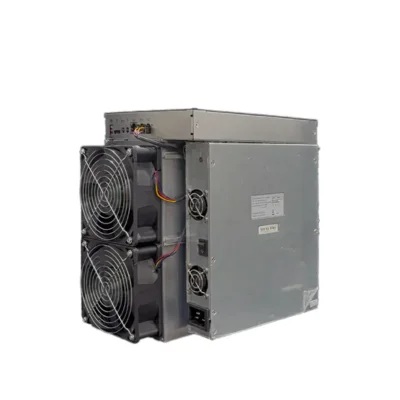
Pinecone Matches INIBOX Pro 2.4 GH/s Initverse (INI) Miner
2.4 GH/s | 1280W
VersaHash · New
$8,499
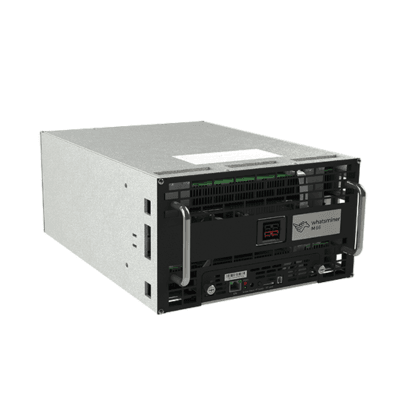
MicroBT Whatsminer M78S Hydro 472 TH/s Bitcoin Miner
472 TH/s | 6550W
SHA-256 · New
$8,699
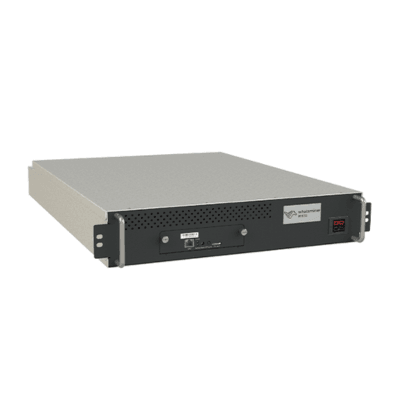
MicroBT Whatsminer M6DS++ Hydro 592 TH/s Bitcoin Miner
592 TH/s | 9200W
SHA-256 · New
$4,959
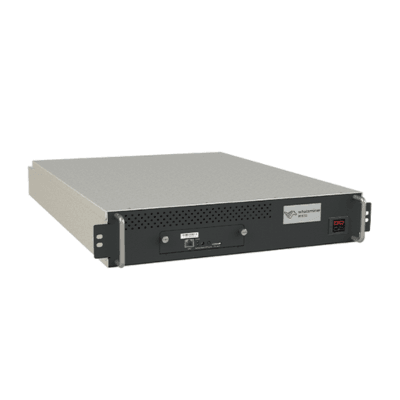
MicroBT Whatsminer M6DS+ Hydro 540 TH/s Bitcoin Miner
540 TH/s | 9200W
SHA-256 · New
$4,699
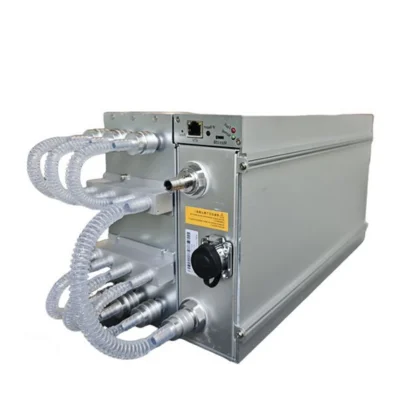
Bitmain Antminer S21j XP Hydro 495 TH/s Bitcoin Miner
495 TH/s | 5940W
SHA-256 · New
$6,579
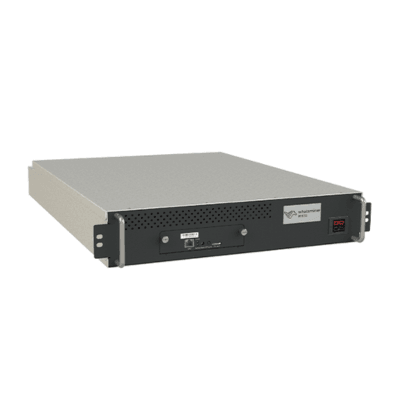
MicroBT Whatsminer M63S+ Hydro 430 TH/s Bitcoin Miner
430 TH/s | 7208W
SHA-256 · New
$4,099
Want the numbers run for your site?
Send us your electricity rate, available amperage and budget. We will model the machines that actually pay back at your power cost — no obligation.
Talk to an engineer